A few years ago, hardly anyone was talking about live shopping.
In China, it has long been an established sales channel. In Europe and the US, it is still less mature, but its growth has accelerated significantly over the past few years, especially following the expansion of TikTok Shop across Europe.
So, what is it?
In simple terms, it’s shopping live.
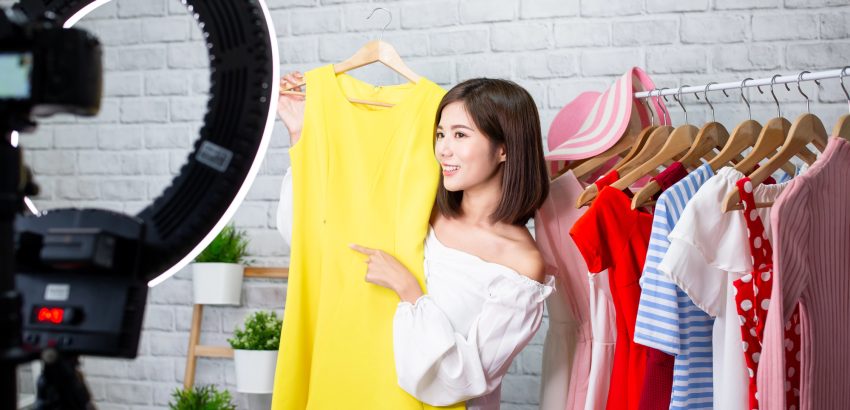
You join a live stream where a company representative showcases products, demonstrates how they work, answers viewers’ questions, and customers can purchase them instantly.
Sounds a little unusual?
Then again, a few years ago, buying through Facebook, Instagram, or TikTok sounded unusual too. Today, it feels completely normal.
Why does it work?
Because people don’t just buy products. They buy confidence.
When you see a product being used in real time, ask questions, hear immediate answers, and watch someone interact with it, much of the uncertainty that still comes with online shopping simply disappears.
According to McKinsey, a well-executed live shopping experience can generate up to 10x higher conversion rates than traditional e-commerce.
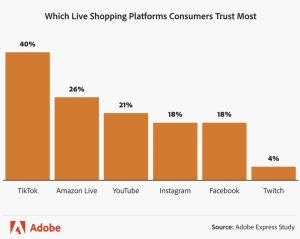
Adobe research also found that 68% of US shoppers feel more confident purchasing during a live shopping event than through a standard online store.
The second key ingredient is urgency
Live streams often include limited-time offers or exclusive discounts available only during the broadcast.
And it works.
As many as 74% of participants say that a limited-time offer was the main reason they decided to buy.
The benefits go both ways.
After live shopping sessions, 88% of customers report being satisfied with their experience, compared to around 74% in traditional e-commerce.
Another interesting fact: products purchased through live shopping are returned 40–50% less often.
It makes sense that live shopping first took off in categories where products benefit from being seen in action—fashion, beauty, consumer electronics, and home interiors.
But I don’t think that’s where it stops.
If you can demonstrate a product on screen, explain its value, and answer customers’ questions, you can sell it during a live stream.
It’s already happening in Lithuania
The first brands to experiment with live shopping were beauty companies during the pandemic.
Later, smaller fashion boutiques joined in, with viewers reserving products in real time during their broadcasts.
Today, one of the best examples in Lithuania, in my opinion, is IKEA.
Their live streams aren’t just about furniture. Interior designers join the broadcasts, offer practical advice, answer questions, and help people make informed decisions.
In other words, the sales experience becomes valuable content.
And that’s where I believe the real strength of live shopping lies.
People want to see, understand, ask questions, and only then decide.
That’s why I don’t see live shopping as a passing trend.
I see it as a format that will become an increasingly important part of e-commerce. 🫡
Photo: Depositphotos
Author: Liudas Stanevičius